
Why Sewing Machine Maintenance Matters (And What to Do About It)
, by Heather Cousins, 3 min reading time
, by Heather Cousins, 3 min reading time
A well-maintained sewing machine is a happy sewing machine. Here are five essential maintenance tips for all sewists — plus when it's time to call in a professional.
Your sewing machine is one of your most important creative tools — and like any tool, it works best when it's well looked after. Whether you sew every day or pull your machine out for special projects, a little regular maintenance goes a long way. And it's not just sewing machines — these tips apply to all your machines, including sergers and embroidery machines too. Here's what you need to know.
Lint is the enemy of a happy sewing machine. Every time you sew, tiny fibres from your thread and fabric accumulate under the needle plate, in the bobbin area, and around the feed dogs. Left unchecked, this buildup can cause skipped stitches, tension problems, and even motor strain.
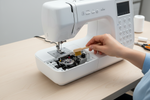
To clean your machine, use a lint brush, a cleaning brush, a simple soft paintbrush, or a mini vacuum attachment kit to gently remove lint and debris. Be gentle — the key is to brush lint away, not push it further into the machine. Avoid using sharp tools that could damage delicate parts, and skip the compressed air, which can actually drive lint deeper inside. Aim to clean every few weeks, or right after a project with particularly linty or furry fabric like fleece or flannel.
A dull or damaged needle is one of the most common causes of sewing problems — skipped stitches, snagged fabric, popped thread — and most sewists change their needle far less often than they should. A good rule of thumb: change your needle every 8 hours of sewing time, or at the start of every new project. It's a small thing that makes a big difference.
Most modern sewing machines, sergers, and embroidery machines are self-lubricating and don't require oiling at home. However, older machines and some models still benefit from regular oiling. Check your manual to find out if your machine needs oil, where to apply it, and how often. Using the wrong oil — or oiling the wrong spots — can cause damage, so when in doubt, bring it in to a professional.
Your machine will usually tell you when something's wrong — if you know what to listen for. Unusual noises, skipped stitches, uneven tension, fabric not feeding properly, or the machine feeling sluggish are all signs that something needs attention. Catching these early can prevent a small issue from becoming a costly repair.
Even with great home maintenance, every sewing machine benefits from a professional service once a year — or more often if you sew frequently. A trained technician will clean, oil, adjust the timing, check the tension, and make sure everything is running smoothly. Think of it like a car service: regular tune-ups keep small problems from becoming big ones and extend the life of your machine significantly.
At The Wobbly Bobbin, we offer professional sewing machine repair and servicing for all makes and models. Whether your machine needs a routine tune-up or something more involved, our experienced technicians are here to help. Book your service today and keep your machine sewing beautifully for years to come.


